Voice
Mária Temesi
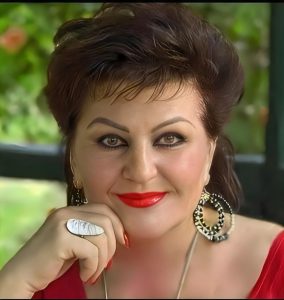 Mária Temesi received her first diplomas in singing and piano teaching in her hometown of Szeged in 1979. She continued her studies at the Franz Liszt Academy of Music in Budapest and graduated with honours in opera performance and vocal pedagogy in 1981. Later, she earned the academic titles of Magistra Habilitata Arte Vocali and Doctor of Liberal Arts (DLA), establishing herself as both a distinguished performer and an experienced vocal teacher.
Mária is the recipient of the prestigious Franz Liszt Prize and a First Prize winner at two major international competitions: the SBRAC International Singing Competition in Rio de Janeiro (1981) and the Luciano Pavarotti Singing Competition (1985). She made her operatic debut in 1982 as Elsa in Wagner’s Lohengrin at the Hungarian State Opera, where she was a permanent member from 1981 to 2022 and later served as Opera Ambassador (2014–2022), presenting numerous educational opera lectures annually.
Over the course of her international career, she performed nearly fifty leading soprano roles in operas by Mozart, Verdi, Wagner, Puccini, Tchaikovsky, and Richard Strauss, as well as in twentieth-century and contemporary repertoire. She appeared on major opera stages across Europe, the United States, Asia, and South America, and at distinguished festivals such as the Budapest Spring Festival and the Prague Spring International Music Festival. In 2004, Hungaroton released her acclaimed solo CD, Wagner Heroines, recorded with the Hungarian Radio Symphony Orchestra under the direction of Yuri Simonov. From 1997 to 2023, she served as Head of the Department of Solo Singing at the University of Szeged. She is the founder and artistic director of the József Simándy International Singing Competition and has been elected a member of the Hungarian Academy of Arts (MMA). Currently, she teaches at the TRIOLA Music School in Szeged, is active as a vocal pedagogue, gives international masterclasses, and regularly serves on juries for prestigious singing competitions worldwide.
Evelyn Schörkhuber
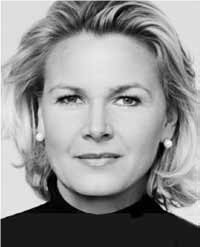 Evelyn Schörkhuber was born in Steyr, Austria and received her earliest musical training in Weyer and Waidhofen/Ybbs, where she learned piano, guitar und violoncello. She started her voice lessons at the age of 12 and made her very first stage appearance as a 15 year-old high school student, singing the whole roles of Papagena in Mozart’s Magic Flute, Susanna in Mozart’s Marriage of Figaro and Hänsel in E. Humperdinck’s Hänsel and Gretel. While still at the Musik und Kunst Privatuniversität der Stadt Wien, Evelyn performed a number of different roles in studio productions, including the roles in the works of W. A. Mozart, Johann Strauß, Gilbert and Sullivan and others. From 2000 to 2003, Evelyn had a young artist’s contract with the Vienna Burgtheater, where she appeared in both singing and speaking roles. After completing her singing studies, Evelyn performed with the NÖ Tonkünstler at the Reinsberg Opera Festival, at the Vienna Jugendstil Theater and on tour through Japan. Extensive concert performances with the Baroque ensemble “Trinito”, the “Lichtspiel” duo, and the renowned “Vienna String Quartet” also led her to Spain, Japan, Iceland, Israel and Italy. In the spring of 2012, Evelyn appeared as a soloist with the Ensemble Mosaik, performing a program of virtuous arias by G. F. Händel. In June 2012 she was a third place winner at the Tournoi International de Musique in Paris. In 2013, with the pianist Volker Nemmer, she founded the chamber music project Lied im Brick. Since September 2013 Evelyn has been teaching at the vocal faculty at the R. Wagner Conservatory, Vienna. Many of her students are prize winners and finalists of important competitions, like Grandi Voci, Belvedere, Magda Oliveri, St Petersburg competition and others. In 2016 she started a SPA–a, together with D. Sarge, intended for young singers at the Junge Schubertiade Vienna. Since 2018 she has been the event director for the Vocal Arts at Academia Musica in Vienna, and is also a member of the Vocal Arts Faculty of the Vienna Summer Music Festival (2017-2019). She has masterclasses at Barry University and South Florida Conservatory of Music. She is also a member of the Music without Borders. She has worked with numerous conductors and stage directors and her repertoire extends from the works of Haydn to Stravinsky.
Vedrana Šimić
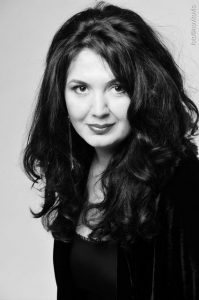 Vedrana Šimić, soprano, was born in 1979 in Tuzla, where she completed her primary and secondary education. She began her vocal studies in 1998 at the Music Academy in Sarajevo in the class of Prof. Paša Gackić, and continued at the Music Academy in Zagreb, where she graduated in 2003 in the class of Prof. Mira Zidarić Orešković, acquiring the titles of Academic Musician–Singer and Professor of Singing. During her studies, she was a scholarship holder of the Croatian Cultural Society (HKD) “Napredak” and the University of Zagreb, as well as a three-year scholarship recipient of the prestigious CEE Musiktheater foundation in Vienna. She pursued further training with the Italian pedagogue Paolo De Napoli and Prof. Dunja Vejzović.
Vedrana made her debut in 2004 at the Opera of the Croatian National Theatre in Zagreb. She has performed on the opera stages of Zagreb, Rijeka, Split, and Sarajevo, achieving more than twenty leading and title roles. At the premiere of the first Montenegrin opera, “Balkanska carica”, in 2008, she played the title role. Her international career has been marked by performances at the Festival de Ópera de Brasília in Brazil (title roles in the operas Tosca and Salome), as well as concerts at the Musikverein in Vienna, in Dublin and Tirana, and at festivals such as Rijeka Summer Nights, Mostar Spring, and Sarajevo Winter. She has collaborated with the Zagreb Philharmonic Orchestra, Sarajevo Philharmonic, and Belgrade Philharmonic Orchestra, as well as the Croatian Radiotelevision Symphony Orchestra and orchestras in Montenegro, Albania, and Brazil, under the baton of conductors such as Nikša Bareza, Pavle Dešpalj, Ivan Repušić, and Loris Voltolini. For the archives of Croatian Radiotelevision, she recorded 15 solo songs by Croatian composers, and in 2015 she performed the leading female role in the film “Stupica nevidljivog djeteta”. From 2008 to 2018, she held the status of a freelance artist of the Republic of Croatia.
She won the Croatian Theatre Award for Best Female Opera Role (for the role of Adriana Lecouvreur), and she also won twice “Štefanija Lenković” Award of the Croatian National Theatre Ivan pl. Zajc for her performances in the operas Adriana Lecouvreur, Manon Lescaut, and La forza del destino. She has been teaching at the Academy of Music, University of Sarajevo since 2016, and in 2022 she was appointed Associate Professor. From 2017 to 2023, she served as Head of the Department of Solo Singing.
Terezija Kusanović
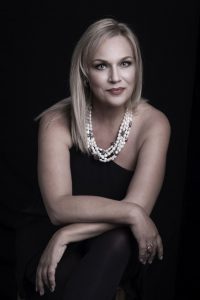 Terezija Kusanović was born in Split, where she completed her musical education. After graduating in music pedagogy, she enrolled in solo singing studies under Prof. N. Manuilenko. She graduated in opera and concert singing as well as vocal pedagogy, and subsequently, under the mentorship of the same professor, won a Master of Arts degree at the Academy of Music in Zagreb. She further honed her skills at masterclasses with distinguished artists such as B. Cvejić, D. Vejzović, O. Miljaković, M. Keenze, C. Munzer, G. Zeller, G. Glaze, E. Blahová, J. Blakely, V. Venejev, and F. Cedolins.
Terezija made her debut in opera in productions of the Academy of Arts and at the Croatian National Theatre in Split, where she soon developed a distinctive artistic profile. She began her professional career with the title role in the opera Judita by F. Parać at the Croatian National Theatre Ivan pl. Zajc in Rijeka and later performed the same role on the Split stage as well. At the Croatian National Theatre in Split, she performed a number of notable mezzo-soprano roles, among which Carmen, Dalila, Azucena, Ulrica, Preziosilla, Suzuki, Zita, Fenena, Maddalena, Orlovski, and Doma are of particular note. She also appears as a guest at other Croatian national theatres, and has pursued an international career through performances in Italy, Austria, Slovakia, Bosnia and Herzegovina, and South Korea, where she has presented both operatic and concert repertoire. She has collaborated with many renowned conductors and directors, thereby confirming her artistic versatility.
Beyond her operatic work, she has developed a rich concert career. Her repertoire includes oratorio and symphonic works such as Mozart’s and Verdi’s Requiems, Rossini’s Stabat Mater, and Beethoven’s Ninth Symphony, as well as numerous solo songs. Terezija established the ensemble Mediterraneo Project. She is the winner of international awards, including the Voce Verdiana recognition and the Ante Marušić Award from the Croatian National Theatre in Split for her roles as Carmen and Dalila. She is an assistant professor of solo singing at the Academy of Arts in Split.
Lilia Gamberini
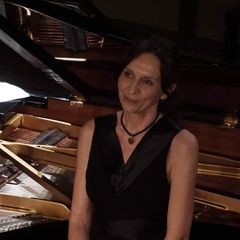 Lilia Gamberini was born in Genoa, where she began her musical education at an early age, studying piano with M. Del Vecchio. Alongside her classical studies, she graduated in violin from the G. Verdi Conservatory in Turin, and later in solo singing from the N. Paganini Conservatory in Genoa. Her vocal development was significantly shaped by her mentors G. Murmura, R. Finotti, and Maestro A. Tonini.
Lilia’s operatic journey began in 1991, when she appeared in the title role of La finta semplice by Wolfgang Amadeus Mozart. She has performed in prestigious opera houses and institutions such as the Sferisterio di Macerata, the Teatro Comunale di Bologna, the Teatro Massimo Bellini, the Teatro Comunale di Firenze, La Fenice in Venice, and the Teatro Carlo Felice. She has worked under the baton of distinguished conductors including Riccardo Chailly, Richard Bonynge, Marco de Bernart, Donato Renzetti, Bruno Campanella, and Alberto Zedda. Beyond her operatic career, she maintains a rich concert career, performing at festivals such as the Sagra Musicale Umbra and the Venice Biennale, as well as at the Philharmonic Academy in Bologna and the Teatro delle Erbe. Lilia has also given a notable series of solo concerts at Italian cultural institutes in Lübeck and Wolfsburg, as well as at the University of Kiel.
Her voice featured in Harem Suare, directed by Ferzan Özpetek and screened at the Cannes Film Festival in 1999. She took part in the bicentenary celebrations of Giuseppe Verdi at the Teatro Carlo Felice and, in 2013, recorded the album Mazzini, la Chitarra e l’Opera. In 2015, she sang the title role in the first modern production of Ernelinda by Lorenzo Vinci. More recently, she has appeared in Don Giovanni by Wolfgang Amadeus Mozart and I due timidi by Nino Rota. In 2022, she curated an exhibition and wrote a monograph on the ensemble I Madrigalisti di Genova, founded by her father, Leopoldo Gamberini. Lilia Gamberini is also a professor of solo singing at the A. Vivaldi Conservatory.
Piano
Ilaria Loatelli
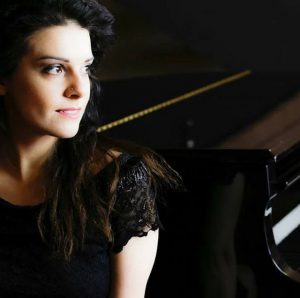 Ilaria Loatelli, a distinguished pianist born in Verona, gained recognition for her exceptional talent and expressive playing from an early age. After performing with orchestras at just eight years old, she was widely regarded as a piano prodigy. She began her studies at the E.D. Dall’Abaco Conservatory in Verona with Laura Palmieri, and between 1994 and 1999 won thirty absolute first prizes at Italian and international piano competitions.
Her recording Variations for a Virtuoso, released with the national music magazine SuonareNews, features works by Bach/Busoni, Brahms (the complete Paganini Variations), and Liszt. In 2016 she appeared as a guest artist at the Golden Key Festival at Carnegie Hall in New York. She maintains an active international concert career, performing throughout Europe, China, North America, and Australia.
In 2022 she toured Germany with the Klassische Philharmonie Bonn, performing Beethoven’s Triple Concerto in major venues including the Konzerthaus Berlin and Laeiszhalle Hamburg. Her performances have been featured at leading festivals such as Maggio Musicale Fiorentino, MITO Settembre Musica, the Festival de Música de Coimbra, and the Yamaha Festival. She also participated in the Chopin Marathon in Milan alongside Ivo Pogorelich, broadcast by Mediaset.
Ilaria Loatelli graduated with highest honors from the Accademia Nazionale di Santa Cecilia in Rome and received the Vittoria Award from Sir Antonio Pappano as the best graduate of the year. She currently serves as Principal Piano Professor at the “Umberto Giordano” University in Foggia and teaches at the International Music Academy Talent Music Master Courses in Brescia.
Bruno Vlahek
 Bruno Vlahek earned his degree in piano from the Zagreb Academy of Music in the class of Vladimir Krpan. He completed postgraduate studies at the Haute École de Musique in Lausanne under Jean-François Antonioli and at the Hochschule für Musik in Cologne under Vassily Lobanov, where he also studied improvisation and composition. He further refined his artistry with the legendary Dmitri Bashkirov at the Queen Sofía College of Music in Madrid.
Regarded as one of Croatia’s most prominent musicians, Vlahek is celebrated for his exceptional versatility, “fantastic virtuosity,” and profound musical insight. As both a pijanist and composer, he maintains a vibrant international career, performing at prestigious venues such as the Palau de la Música in Barcelona, the Liszt Academy in Budapest, Dubai Opera, St Martin-in-the-Fields in London, the Auditorio Nacional in Madrid, the Gasteig in Munich, the Mozarteum in Salzburg, and the Seoul Arts Center. He is also a regular guest at major festivals in Dubrovnik, Vienna, Berlin, Moscow, New York, and Verbier.
A laureate of international piano competitions in Paris, Shanghai, and Lyon, his numerous accolades include the Paderewski Prize, the Pnina Salzman Memorial Prize, the Zagreb Philharmonic’s Young Musician of the Year title, and a diploma of distinction awarded by Queen Sofía of Spain. As a composer, he has won prizes at the Cristóbal Halffter and New Classics competitions, received the Stjepan Šulek Award, and is a two-time winner of the Porin Award. His catalog comprises over 70 works across various genres, which have been performed on five continents.
His performances are broadcast on BBC Radio 3, France Musique, and other major networks. His discography includes the complete Rachmaninov Études-Tableaux and Scarlatti sonatas for Naxos, while his album Touches was named one of Croatia Records’ 75 most significant releases. He currently serves as a professor at the Katarina Gurska Conservatory in Madrid and regularly leads international masterclasses.
Lorenzo di Bella
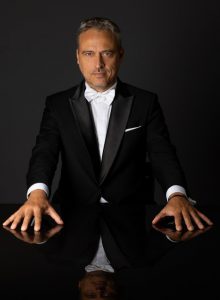 Lorenzo Di Bella, the final student of renowned Russian pianist Lazar Berman, won Italy’s top national piano award, the Premio Venezia, in 1995. In 2005, he went on to receive the First Prize and Gold Medal at the Horowitz International Piano Competition in Kiev. In 2006, he received the Sinopoli Prize at the Quirinale from former Italian President Carlo Azeglio Ciampi, honoring his artistic achievements and commemorating the late conductor G. Sinopoli.
In 2013, he performed the complete Rachmaninov Études-Tableaux in Turin and Milan as part of the MITO – Settembre Musica Festival. He has appeared as a soloist with orchestras including the Orchestra dell’Accademia Nazionale di Santa Cecilia, I Pomeriggi Musicali of Milan, Filarmonica Marchigiana, the Armenian National Philharmonic Orchestra, Thüringer Symphoniker, Südwestdeutsche Philharmonie, the Nancy Symphony Orchestra, MAV Budapest Symphony Orchestra, the Orchestra Sinfónica del Perú, OSUG of Guanajuato, the Ukrainian National Symphony Orchestra, and the Philharmonisches Kammerorchester Berlin, among many others. Lorenzo has collaborated with conductors including J. Conlon, K. Karabits, E. Preu, O. Weder, R. Seehafer, V. Christopoulos, H. Niyazi-Tura, V. Sirenko, J. C. Lomonaco, F. Ting, F. Lanzillotta, L. Piovano and M. Caldi. He studied with B. Bizzarri, F. Scala, L. Berman and S. Perticaroli at the Rossini Conservatory in Pesaro, the “Incontri col Maestro” Academy in Imola, and the Accademia Nazionale di Santa Cecilia in Rome.
He is currently Professor of Piano at the Pesaro Conservatory and regularly gives courses and masterclasses at institutions including the Gnessin Institute in Moscow, the Imola Piano Academy, the Shanghai Conservatory of Music, the Vladigerov National Academy in Sofia, and the University of Győr. In February 2022, he performed with the Orchestra Filharmonica Marchigiana in the Golden Hall of the Musikverein in Vienna as part of the Musik der Meister series.
He is the founder and artistic director of the Civitanova Classica Piano Festival, the Mugellini Festival in Potenza Picena, and the La Palma d’Oro International Piano Competition in San Benedetto del Tronto.
Sophie Patey
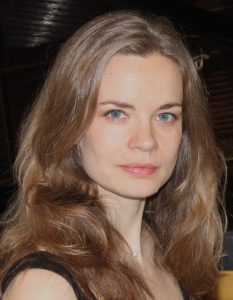 Sophie Patey studied at the Cologne University of Music and Dance with Prof. Florence Millet and earned her Doctorate in Musical Arts in Piano Performance at Stony Brook University (State University of New York). During her studies, she specialized in contemporary music and collaborated with composers such as Thomas Adès, Luca Francesconi, Martin Matalon, and Johannes Maria Staud, premiering numerous works. She was also a scholarship recipient at the International Ensemble Modern Academy in Frankfurt.
Throughout her career, Sophie has performed extensively as a soloist and chamber musician across North America, Europe, Asia, and Africa.
In January 2023, she performed Ligeti’s Piano Concerto with the WDR Symphony Orchestra under the baton of Manuel Nawri. Her chamber music partners include soloists from the Royal Concertgebouw Orchestra, Mahler Chamber Orchestra, Chamber Orchestra of Europe, Frankfurt Radio Symphony, Frankfurter Opern- und Museumsorchester, and Ensemble Modern. She has appeared in prestigious venues such as the Berliner Philharmonie, Concertgebouw Amsterdam, Konzerthaus Berlin, Alte Oper Frankfurt, and at international festivals in Aix-en-Provence and Darmstadt.
In addition to performing, Sophie Patey is an experienced teacher and coach. She has taught piano and chamber music at Stony Brook University and led masterclasses at various American universities. She has served as a collaborative pianist at Oper Frankfurt, the Juilliard School, Berlin University of the Arts, the Conservatoire National Supérieur de Musique et de Danse de Paris, and the Frankfurt University of Music and Performing Arts. Currently, she is a piano professor at the Conservatoire in Lyon, France, and serves as an official collaborative pianist for the ARD International Music Competition and the International Carl Nielsen Competition. Sophie also mentors young artists and professionals in preparation for concerts and competitions.
Ivan Vihor Krsnik Čohar
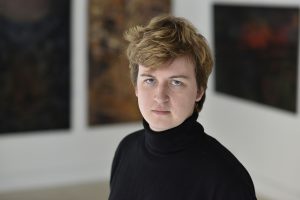 Ivan Vihor Krsnik Čohar (1997, Rijeka) began his musical education at the age of six in his hometown, studying under Prof. Ana Dražul, and graduated with top honors. At the age of 16, he enrolled in piano studies at the Gaetano Donizetti Conservatory in Bergamo, in the class of Prof. Marco Giovanetti, where he graduated cum laude. In 2023, he obtained a second master’s degree cum laude at the Accademia di Musica di Pinerolo (class of E. Pace) and at the Accademia Musicale Santa Cecilia in Bergamo (class of K. Bogino). He further refined his skills at the “Incontri col Maestro” Academy in Imola and attended masterclasses with some of the world’s most distinguished pianists and pedagogues. He also studied harpsichord and basso continuo and plays the viola. Ivan made his orchestral debut at the age of ten, performing Bach’s Concerto in F minor, BWV 1056. Praised as a child prodigy and an exceptional virtuoso, he soon began appearing in solo concerts and recitals. He gained international recognition in 2017 by winning the prestigious Premio delle Arti as the only non-Italian laureate. That same year, he also won the Papandopulo and Ferdo Livadić competitions, receiving the Croatian Composers’ Society (HDS) award for the best performance of a work by a Croatian composer. He has won more than 50 prizes at national and international competitions, including Svetislav Stančić in Zagreb, the Massarosa Piano Competition, and the Lazar Berman International Piano Competition.He has performed at numerous festivals and concert series, including the Osor Musical Evenings, Samobor Festival, St. Mark’s Festival, Spoleto Festival, Onde Musicali Iseo, Brescia and Bergamo Festival, Concerts du Cloître in Nice, Shandelee Music Festival in New York, and the Monferrato Classic Festival. He has given concerts throughout Europe, the United States, and Asia, collaborating with renowned conductors. In 2023, he performed at the Salle Garnier in Monte Carlo and gave a recital in Seoul. He has recorded three albums, and his recording Liszt – Transcriptions was nominated for the International Classical Music Awards.Since 2019, he has taught at several Italian conservatories, and since December 2025 he has been employed at the Academy of Music, University of Zagreb.